Innovative water treatment solutions for demanding environments

Your expert partners for customized water and wastewater treatment in laboratories, hospitals, and industrial facilities

Verfahrensbeschreibung

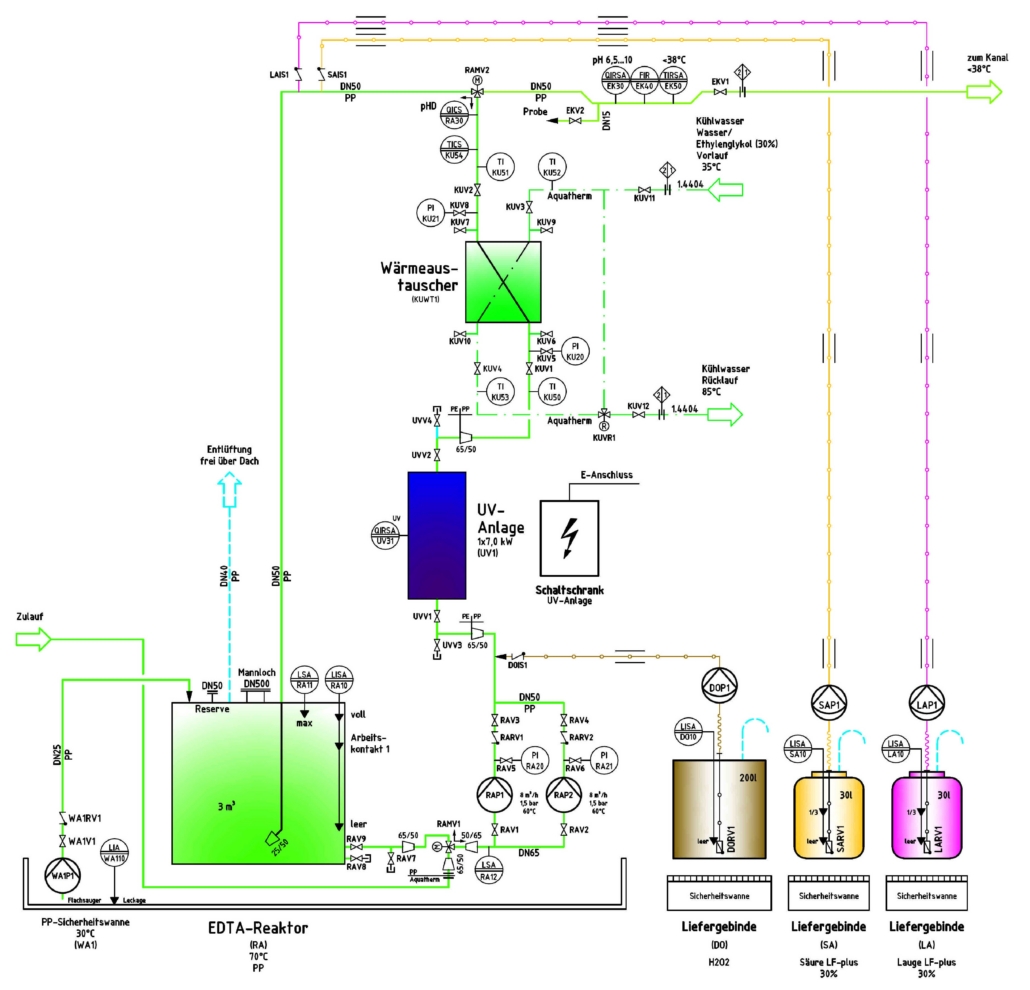
The oxidation process in wastewater treatment is a chemical method in which organic and inorganic contaminants are broken down by oxidizing agents. In this process, oxidizing substances such as ozone, hydrogen peroxide, or potassium permanganate are introduced into the wastewater to alter the molecular structure of the pollutants and convert them into harmless end products such as water, carbon dioxide, and salts. This process is particularly effective in removing stubborn organic compounds that are difficult to break down using conventional biological methods. It offers high degradation performance and ensures a significant reduction in chemical oxygen demand (COD) and biochemical oxygen demand (BOD) in wastewater.

Verfahrensschema der Oxidation

Custom plant engineering

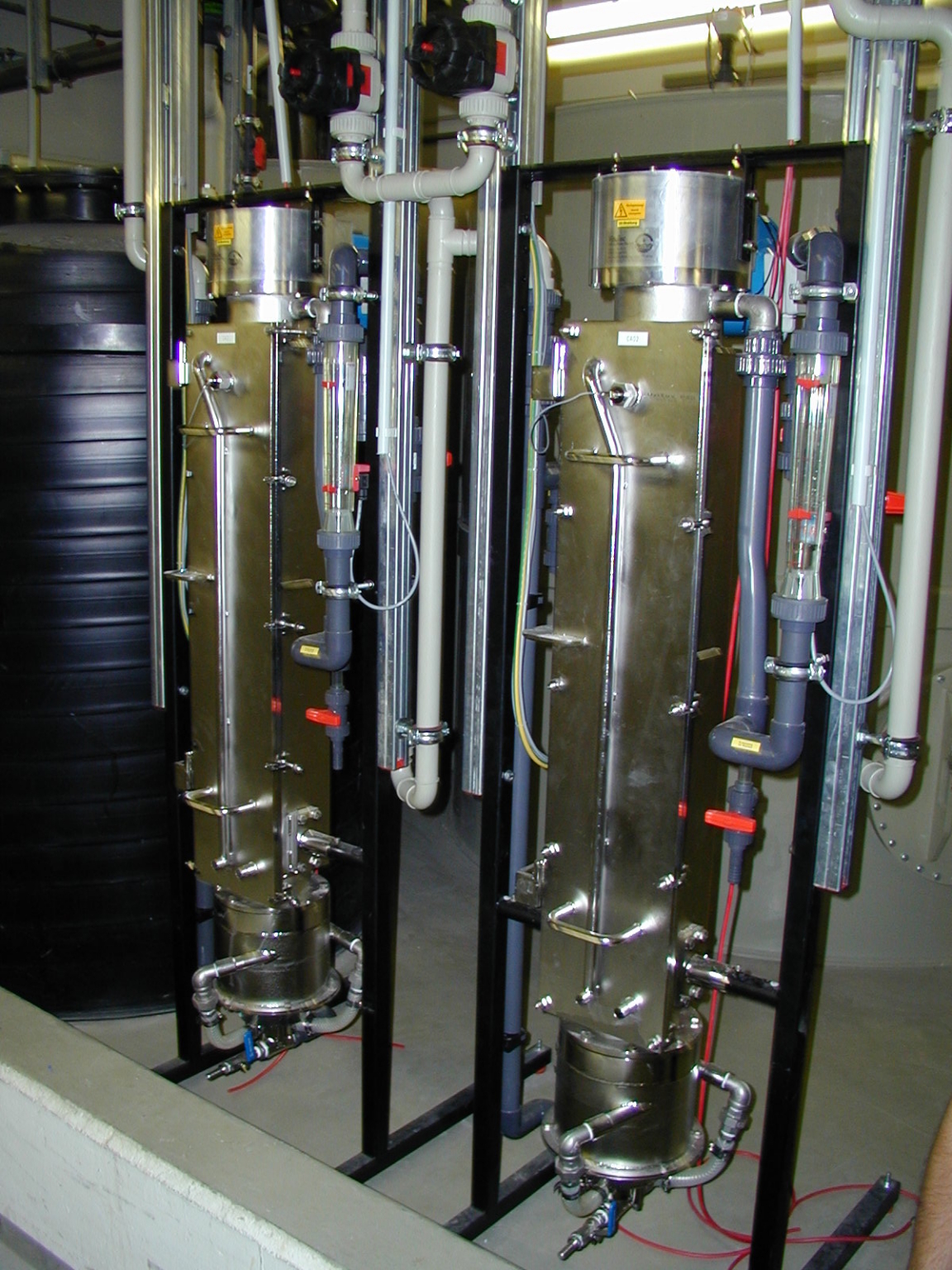
EnviroDTS specializes in the development and construction of customized oxidation plants that meet the specific requirements of various industries. Our systems are designed to efficiently break down complex organic compounds and stubborn pollutants, making them ideal for the pharmaceutical, chemical, textile, and food and beverage industries. By using state-of-the-art technology and precise control systems, we ensure optimal dosing and distribution of oxidants to meet the highest cleaning standards.

Successfully implemented – our reference systems

Bayer AG
Weimar

  • 98% reduction of hormones in wastewater

  • H2O2 dosage

  • 2 x 20 kW UV reactors

  • Capacity 2 x 10 m³/h

miltey biologics
Cologne

  • 97% reduction in EDTA complexing agent
  • 25 m³/day with
  • 5 KW UV lamp with H2O2 dosing

Your contact persons

Volker Luh

Volker Luh

Graduate engineer

Phone: +49 6031 7318 24
Email: volker.luh@envirodts.de

Andreas Koch

Andreas Koch

Graduate engineer

Phone: +49 6031 7318 23
Email: andreas.koch@envirodts.de