Decontamination of radioactive wastewater

Safe cooling and control systems for nuclear medicine and research

Procedure Description

Decontamination and decay facilities are used for the safe treatment of radioactive sewage and laboratory wastewater. The process relies on the natural decay of radionuclides until the limits defined in the Radiation Protection Ordinance are reached.

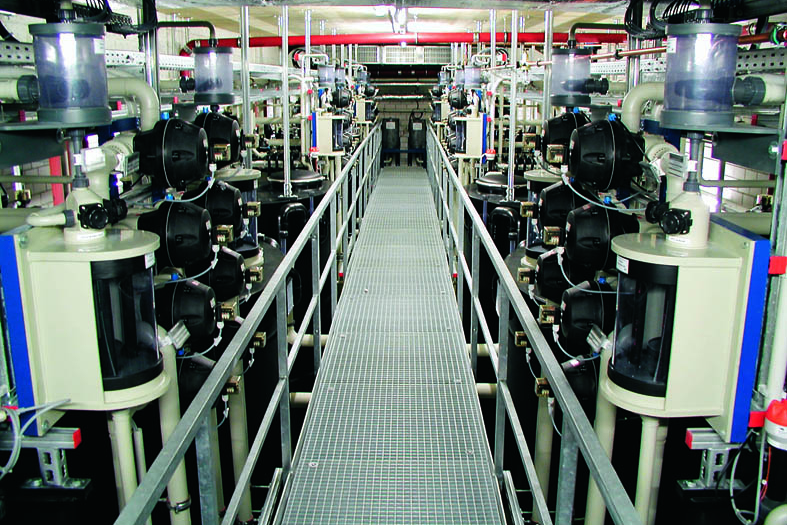
The wastewater is first conveyed via a vacuum system—equipped with a buffer tank and shredding pumps —to special, lead-shielded decay tanks. There, continuous mixing is achieved through aeration and mixing devices to prevent aerobic and anaerobic processes.

Supporting technologies increase efficiency:

  • Vacuum toilets significantly reduce the volume of wastewater.

  • Water reuse systems collect and disinfect shower and hand-washing water and reuse it for flushing toilets.

  • Automatic consumption monitoring tracks fresh water usage in patient rooms and prevents overuse.

Before being discharged into the sewer system, all wastewater undergoes an automatic activity measurement. All readings are recorded and can be submitted to the authorities. The system can be monitored and controlled centrally or locally via modern panel PCs and network control.
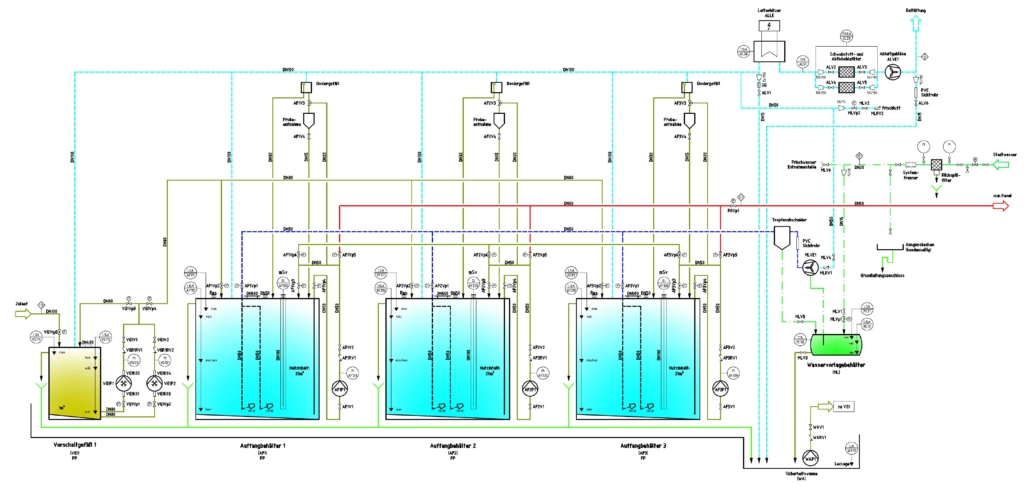
Flowchart of the Decay Facility

Customized decay and monitoring systems for maximum safety

Radioactive wastewater poses the highest demands in terms of safety, technology, and compliance with legal requirements. EnviroDTS develops customized decontamination and decay facilities that are precisely tailored to the volume of wastewater generated, the levels of radioactivity, and the spatial conditions of each facility.

Our commitment: Safety, cost-effectiveness, and ease of use through intelligent system designs—from planning and construction through to commissioning. Every system is designed and documented in accordance with the current requirements of the Radiation Protection Ordinance and relevant DIN standards.

Successfully implemented – our reference projects

Robert Bosch Hospital Stuttgart
Nuclear Medicine Therapy

  • 12 decay tanks, each with a capacity of 10 m³
  • 680 liters of wastewater per day; 175 GBq of activity per year

University Hospital Bonn
Department of Nuclear Medicine and Radiology

  • Stacking system
  • 6 x 15 m³ PP containers
  • 5 x 40-meter underground tanks

Stuttgart University Hospital
Department of Nuclear Medicine and Radiology

  • Bio-Chroma System
  • For 2,200 liters of wastewater per day

University Hospital Würzburg
Department of Nuclear Medicine and Radiology

  • Bio-Chroma System
  • For 2,300 liters of wastewater per day

Your contacts

Volker Luh

Volker Luh

B.S. in Engineering

Phone: +49 6031 7318 24
Email: volker.luh@envirodts.de

Andreas Koch

Andreas Koch

B.S. in Engineering

Phone: +49 6031 7318 23
Email: andreas.koch@envirodts.de